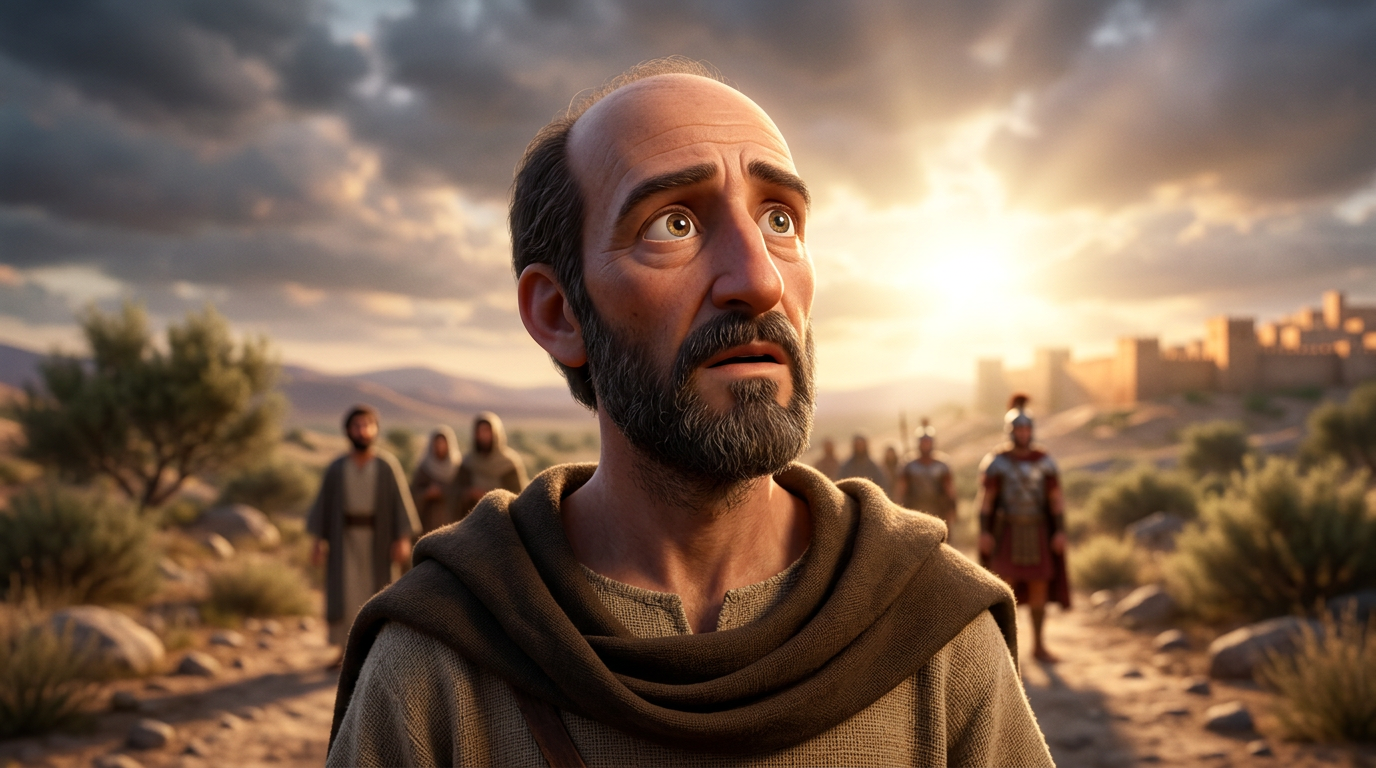
Paul the Apostle
Apostle to the Gentiles
c. AD 5 – 67
Once Saul of Tarsus, persecutor of Christians, met Christ on the Damascus road and became the great missionary apostle.
“For me to live is Christ, and to die is gain.” — Philippians 1:21Talk with Paul the Apostle
The story of Paul the Apostle
Paul the Apostle, originally known as Saul of Tarsus, was a highly educated Pharisee who initially dedicated his life to the suppression of the early Christian movement. He considered the followers of Jesus to be a threat to Jewish tradition and actively participated in their persecution. However, his life took a radical turn during a journey to Damascus when he experienced a direct and blinding encounter with the risen Jesus, leading to his immediate conversion and baptism.
Following this transformation, Paul became the most influential missionary of the early Church, traveling thousands of miles across the Roman Empire to share the Gospel with both Jews and Gentiles. He established numerous Christian communities in cities like Corinth, Ephesus, and Philippi, providing them with guidance through his presence and his powerful letters. These epistles now form a significant portion of the New Testament and provide the theological framework for much of Christian thought and practice for two thousand years.
Paul's ministry was marked by incredible endurance in the face of shipwrecks, beatings, and multiple imprisonments. He frequently emphasized that salvation is a gift of God's grace received through faith in Christ, rather than something earned through human effort or adherence to the Law. His life ended in Rome, where tradition says he was martyred for his faith, leaving behind a legacy that continues to shape the global Church and the lives of countless believers today.
Key passages
Acts 9:1–19
The dramatic account of Saul's encounter with Jesus on the road to Damascus and his subsequent conversion to the faith.
Romans 3:21–26
Paul's explanation of how all people are justified and made right with God through faith in Jesus Christ alone.
1 Corinthians 13:1–13
A profound teaching on the supremacy of love, describing it as the essential quality that defines the Christian life.
2 Corinthians 11:23–28
Paul lists the various trials and sufferings he endured for the sake of spreading the message of the Gospel.
Key books
- Acts
- Romans
- 1 & 2 Corinthians
- Galatians
- Ephesians
- Philippians
Questions you can ask
- “What happened on the Damascus road?”
- “Explain grace through faith”
- “Why did you write Romans?”
Common questions
Why are Paul's letters so important to the Bible?
His letters provide essential teaching on the nature of God, the meaning of Jesus' death, and practical advice on how to live as a Christian community.
Did Paul meet Jesus before the crucifixion?
There is no record in the Bible that Paul met Jesus during His earthly ministry; his encounter with Christ happened after the resurrection.
What was Paul's main message?
His central message was that God offers salvation and reconciliation to everyone, regardless of their background, through faith in Jesus Christ.