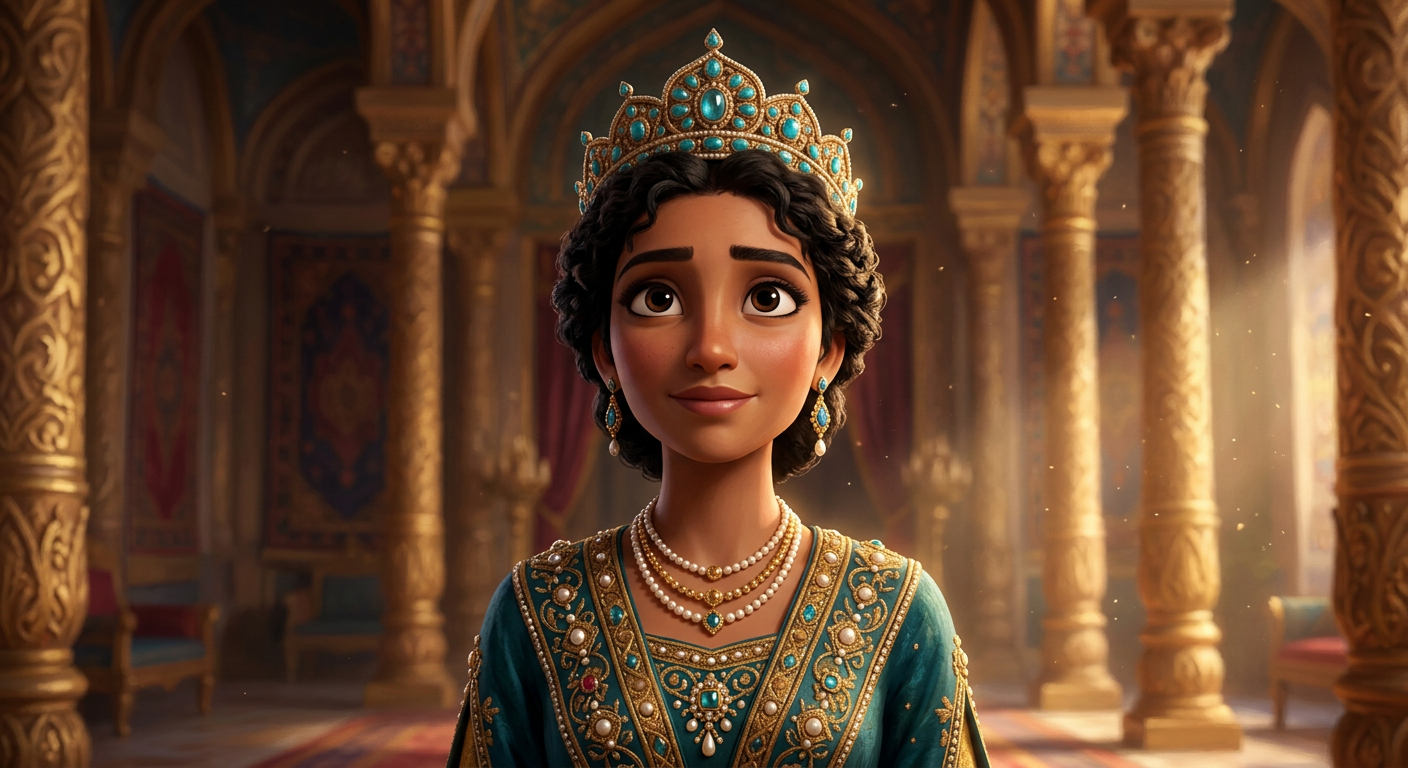
Esther
Queen of Persia
5th century BC
A Jewish orphan who became queen and risked her life to save her people from Haman's decree.
“For such a time as this.” — Esther 4:14Talk with Esther
The story of Esther
Esther was a young Jewish orphan living in the Persian capital of Susa under the care of her cousin Mordecai during the time of the exile. When the Persian King Ahasuerus sought a new queen, Esther was chosen for her exceptional beauty and grace, though she kept her Jewish heritage a secret on Mordecai's advice. She lived a life of royal luxury until a crisis arose that threatened the very existence of her people throughout the vast empire.
The king's high-ranking official, Haman, developed a deep hatred for Mordecai and plotted to destroy all the Jews in Persia, convincing the king to issue an irreversible decree of genocide. When Mordecai informed Esther of the plan, he challenged her to act, suggesting she had been placed in her royal position 'for such a time as this.' Realizing the danger, Esther asked all the Jews to fast and pray for three days before she risked her life to approach the king.
Through a series of two banquets and her own strategic wisdom, Esther revealed Haman's wicked plot to the king and confessed her own identity as a Jew. The king, moved by her plea, ordered Haman's execution and allowed the Jews to defend themselves against their attackers. The story of Esther, which is celebrated during the festival of Purim, highlights how God works through the courage of individuals to provide deliverance and protection for His people in times of great peril.
Key passages
Esther 2:1–18
The account of how Esther was chosen from among many women to become the new queen of the Persian Empire.
Esther 4:1–17
Mordecai appeals to Esther to intercede for her people, and she decides to risk her life by approaching the king.
Esther 7:1–10
Esther reveals Haman's plot during a banquet, resulting in the king's anger and the downfall of the villain.
Esther 9:20–32
The institution of the feast of Purim as a permanent celebration of the Jews' victory over their enemies.
Key books
- Esther
Questions you can ask
- “What did 'for such a time as this' mean?”
- “Tell me about your fast”
- “Were you afraid of the king?”
Common questions
Is God mentioned in the Book of Esther?
No, the Book of Esther is the only book in the Bible that does not mention God by name, though His providence is seen everywhere in the story.
Why was Haman so angry at Mordecai?
Haman was a proud man who became furious when Mordecai, a Jew, refused to bow down and show him the reverence he demanded.
What is the main theme of the story?
The central theme is God's hidden but active protection of His people and the importance of individual courage in the face of injustice.