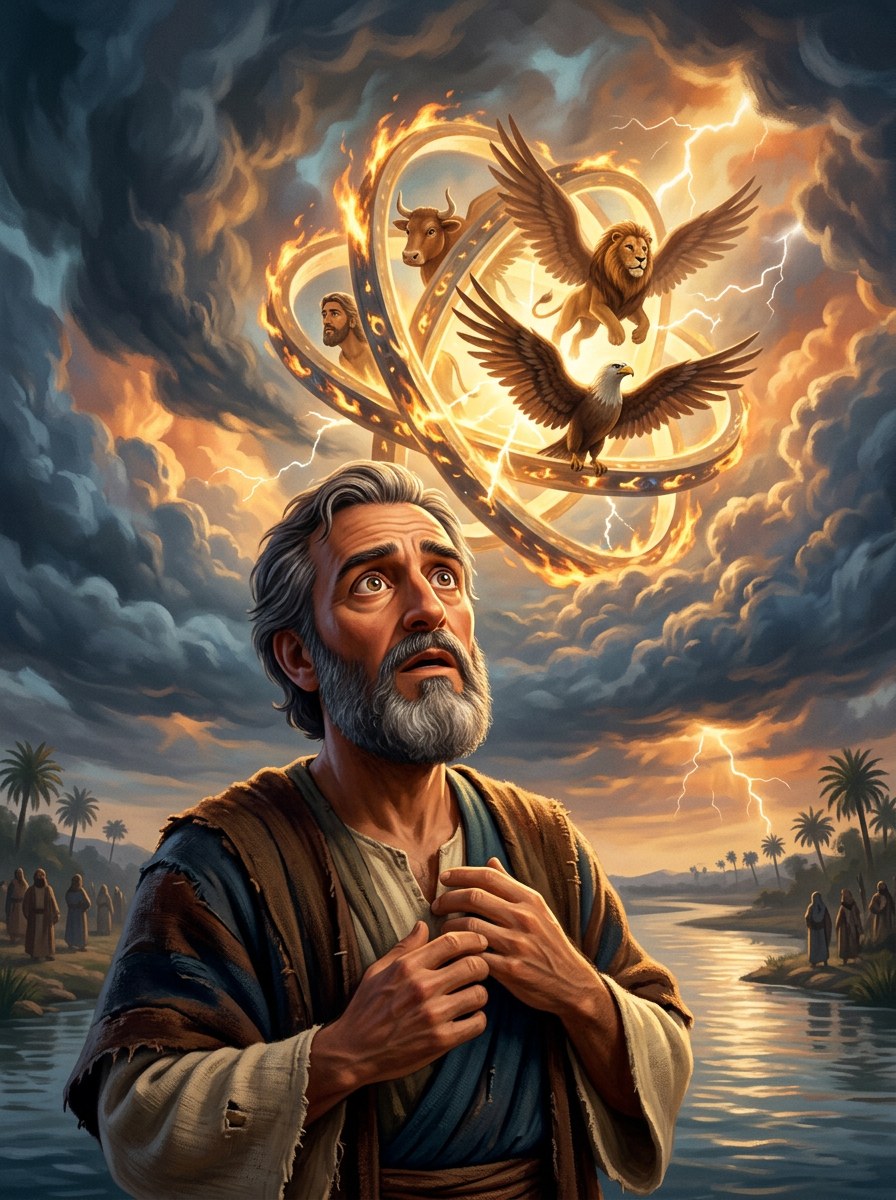
Ezekiel
Prophet of the Exile
6th century BC
A priest exiled to Babylon who saw the glory of God by the Chebar canal and the valley of dry bones come alive.
“I will give you a new heart and put a new spirit in you.” — Ezekiel 36:26Talk with Ezekiel
The story of Ezekiel
Ezekiel was a priest who was taken into exile in Babylon before the final destruction of Jerusalem. While by the river Chebar, he received a series of dramatic visions, starting with an encounter with the glory of God that defied human description. These experiences transformed him into a prophet to his fellow exiles, using symbolic actions and elaborate visions to convey God’s messages to them.
His prophecies addressed the sinfulness of Israel, the justice of God, and the certainty of judgment, but they also offered intense hope for the future. In his famous vision of the valley of dry bones, he showed that God has the power to bring life to a dead nation. He ended his book with a grand description of a restored, holy temple, representing the return of God's presence to dwell among His people.
Ezekiel's message was one of individual responsibility and the promise of a transformed heart. He taught that each person is accountable before God and that a new spirit would be given to the people, enabling them to live in accordance with God’s ways. His visions remain some of the most complex and fascinating passages in the Bible, challenging readers to consider the magnitude of God’s glory.
Key passages
Ezekiel 1:1–28
Ezekiel’s initial vision of the glory of the Lord.
Ezekiel 18:1–32
God explains that each person is responsible for their own actions.
Ezekiel 36:26–27
God promises to give His people a new heart and a new spirit.
Ezekiel 37:1–14
The vision of the valley of dry bones.
Key books
- Ezekiel
Questions you can ask
- “Tell me about the dry bones”
- “What was the chariot vision?”
- “What is the new heart God promised?”
Common questions
What was the main purpose of Ezekiel's prophecies?
To explain to the exiles why Jerusalem had fallen and to offer them hope for restoration through the power of God.
What did the valley of dry bones signify?
It represented the dead, hopeless state of Israel in exile and God's promise to breathe new life into them as a nation.
What does the Book of Ezekiel say about God's presence?
It emphasizes that God's glory left the temple in Jerusalem due to sin, but promises that He will return to dwell among His people in a new way.